
Property trust created by a Will
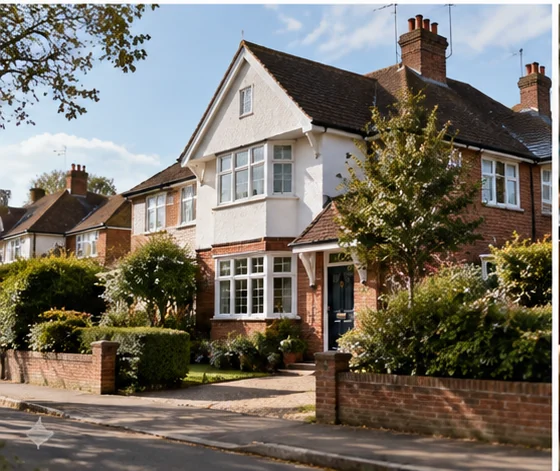
A Will can place a deceased owner’s property share into trust on death. A common example gives a surviving spouse or partner a right to occupy the home while preserving the deceased owner’s share for children or other beneficiaries later.
Lifetime property trust
A lifetime trust is created while the settlor is alive. Transferring a home can change legal ownership, access, tax treatment and future flexibility. It should not be treated as a routine way to “hide” a house from tax or care assessments.
Life interests and occupation rights
A trust can give somebody an interest in possession — for example, a right to occupy a property or receive income — while the capital is ultimately intended for other beneficiaries. The precise rights depend on the drafting.
Joint ownership comes first
For couples, whether the home is held as joint tenants or tenants in common can determine whether a share can pass under a Will trust. See our Tenants in Common guide.
Inheritance Tax and Capital Gains Tax
Trust tax treatment depends on the type of trust and the circumstances. Lifetime transfers can create immediate or later tax consequences, while Will trusts may interact differently with the settlor’s estate and beneficiary interests.
Care fees and deprivation of assets
There is no safe rule that says transferring a home into trust removes it from a future local-authority financial assessment. Deliberate deprivation rules consider purpose and circumstances. See our deprivation guide.
Property Protection Trust Wills
Xwills offers Property Protection Trust Wills for suitable clients. That is a Will-based structure and should not be confused with transferring the whole property into a lifetime trust.
Could there be an additional valuation benefit?
There is a potential argument that the benefit could extend beyond the deceased owner’s share. In Chief Adjudication Officer v Palfrey (1995), R(IS) 26/95, a father entered residential care while his daughter remained in their jointly owned home. The case concerned valuing his interest for Income Support purposes. It supported looking at what that interest could actually fetch on the open market, taking account of the continuing purpose of providing a home for the joint owners, rather than simply dividing the whole property’s value in half.
Applied to Property Protection Trust (PPT) Will planning, the potential argument is that, after the first owner’s share passes into trust, the survivor’s remaining share might also have a reduced market value because of the ownership arrangements and restrictions affecting a sale. That application is a potential argument, not an established outcome: Palfrey did not concern a PPT Will or establish 100% protection from care fees. Later cases, including Wilkinson v Chief Adjudication Officer (2000), demonstrate that a jointly owned share is not automatically worthless. Any additional benefit would depend on the particular circumstances and valuation evidence.
For care-funding assessments in England, Annex B of the Care and Support Statutory Guidance addresses valuation of a person’s beneficial interest. Wales has a separate care-charging framework. This valuation point does not remove the need to consider the trust terms, any assessable rights or benefits, or deprivation-of-assets rules.
Read the Palfrey case report, the later tribunal discussion of Palfrey and Wilkinson and the English statutory guidance on capital valuation.
Frequently asked questions
Can I put my house in trust and keep living there?
Some structures can preserve occupation rights, but the legal and tax consequences depend on the exact trust. It needs individual assessment.
Does a trust avoid probate?
Assets validly transferred to trustees during lifetime may not pass under the Will, but other estate assets can still require probate.
Does a property trust avoid care fees?
No arrangement should be promoted as a guaranteed care-fee avoidance device. Local authorities can consider deliberate deprivation.
Is a Property Protection Trust a lifetime trust?
Usually not in the Xwills context. A Property Protection Trust Will creates the trust on death under the Will.
Tell us what you want to achieve
You do not need to know the name of the legal document or trust before speaking to us. Explain the family, property or planning issue and we can discuss the relevant options.
Have a question before booking? Send us a short message and we’ll respond personally.