Who controls a Life Interest Trust and can the survivor sell the house?
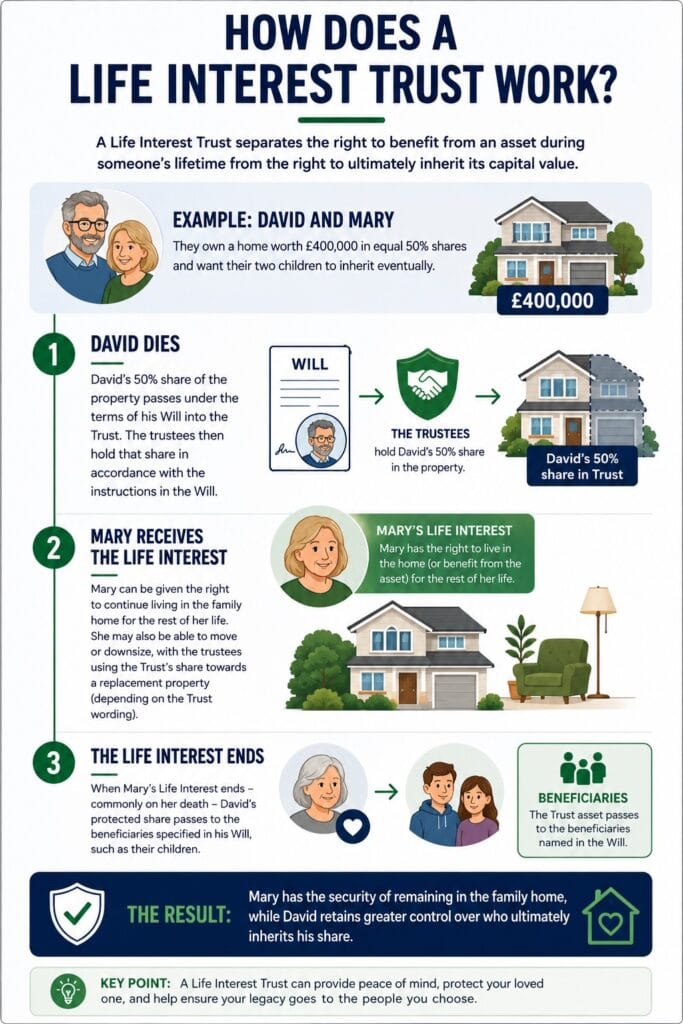
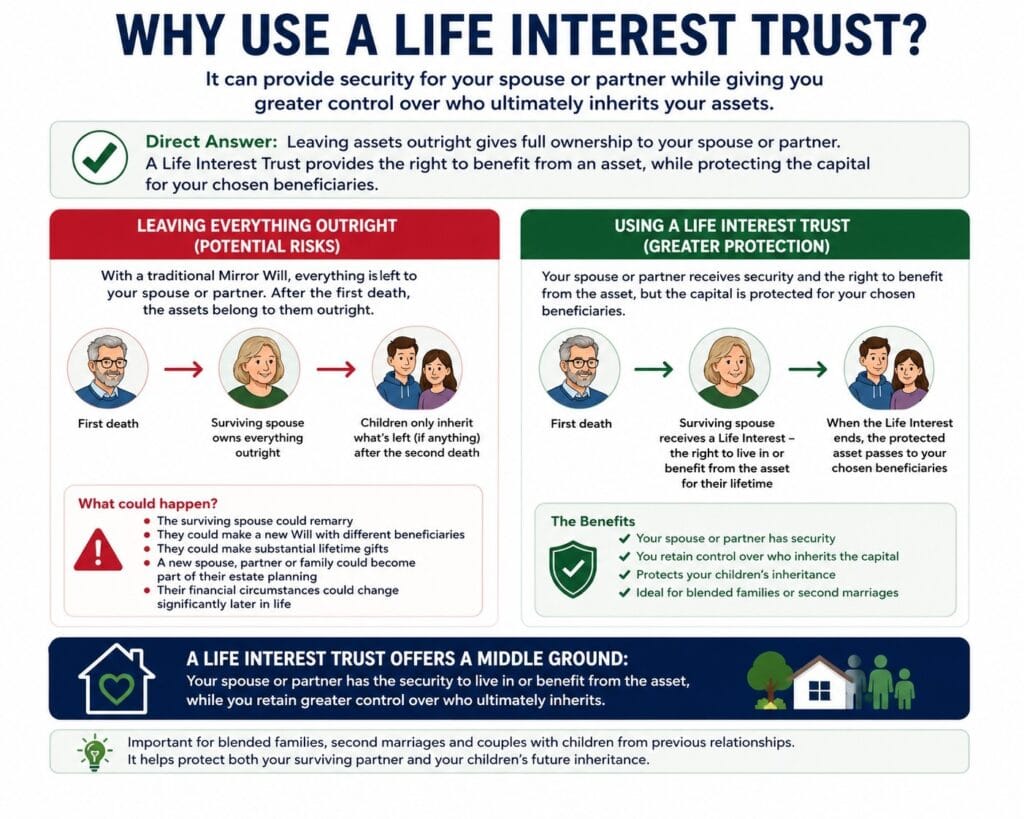
Direct Answer: The trustees are responsible for administering the Life Interest Trust according to the terms of the Will. A well-drafted property Trust can allow the surviving spouse or partner to remain in the home and may also provide flexibility to sell, move or downsize, with the Trust's interest transferred into replacement property or other Trust assets.
What does a trustee actually do?
Trustees are legally responsible for looking after the assets held in the Trust and following the instructions contained in the Will. Their role is different from that of the Life Tenant, who is the person entitled to benefit from the Trust during their lifetime.
Depending on the terms of the Will, trustees may need to deal with matters such as property sales, replacement properties, Trust money, investments and ultimately distributing the Trust assets to the final beneficiaries.
Choosing trustees matters. They may be required to make important decisions involving both the surviving partner and the beneficiaries who will eventually inherit the Trust capital.
Can the surviving partner sell the family home?
A Life Interest Trust does not necessarily mean the survivor is trapped in the same property for the rest of their life. The precise position depends on the wording of the Will, but a properly drafted Trust can provide flexibility for the property to be sold.
For example, the survivor may decide that the family home is too large after their partner's death and wish to downsize. The trustees may be able to sell the original property and apply the Trust's share towards the purchase of a replacement home.
The important point is that selling the original house does not necessarily end the Trust. The protected value can potentially follow the survivor into a replacement property, subject to the terms of the Will and the trustees' powers.
What happens if the survivor downsizes?
If a cheaper replacement property is purchased, the treatment of any surplus money will depend on the Trust provisions. The Trust's proportion may remain within the Trust rather than automatically becoming the survivor's personal capital.
This is why flexibility needs to be considered when the Will is drafted. A Trust designed around a family home should anticipate that the survivor's housing needs may change considerably over the following years.
When does a Life Interest Trust end?
Many Life Interest Trusts end when the Life Tenant dies. However, the Will can specify other circumstances in which the Life Interest ends or changes, so the actual Trust document must always be checked.
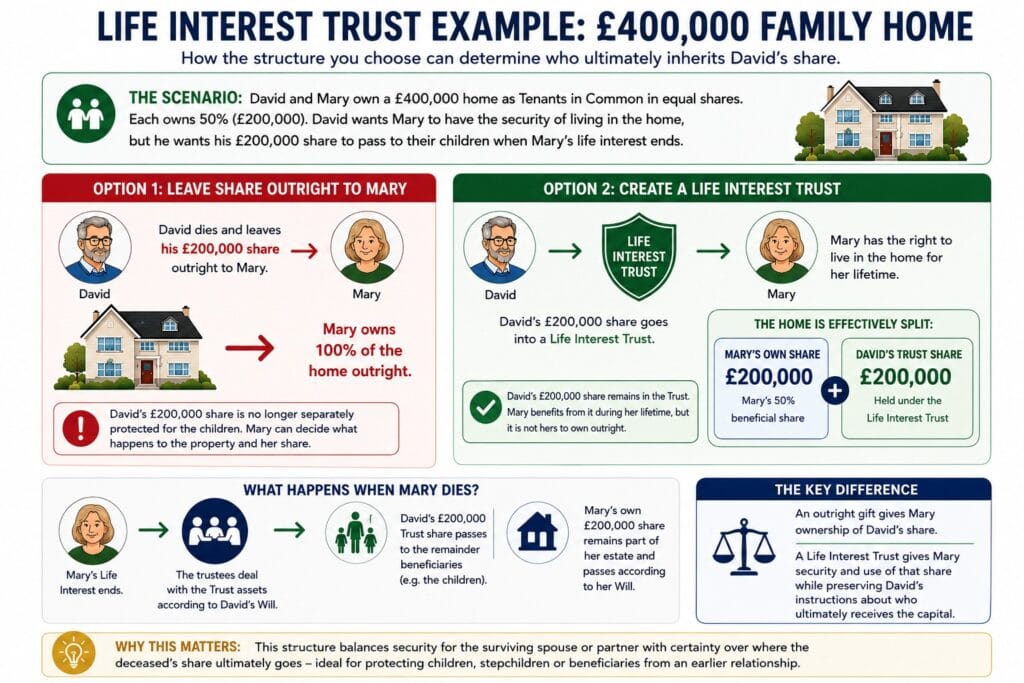
Once the Life Interest has ended, the trustees deal with the Trust capital according to the Will. The assets can then pass to the remainder beneficiaries — commonly the deceased's children or other chosen beneficiaries.
In simple terms:
the survivor receives the lifetime benefit, the trustees administer the protected assets, and the remainder beneficiaries ultimately receive the capital when the Life Interest ends.
You can read more about the responsibilities of trustees in the official
GOV.UK guidance for trustees
.