How to track a probate application online in the UK
Checking the progress of a probate application in England and Wales.

Share this guide

Facebook
X
LinkedIn
Reddit
WhatsApp

At a Glance

Yes, you can track a probate application in England and Wales. If you applied online, you can check the progress of your application through the online probate service and HMCTS will contact you if further information is required. If you applied by post or cannot see the information you need online, you can contact the Probate Service Centre for an update.

Last updated: August 2026 — England & Wales Law | Author: Andrew Walters, Member of the Society of Will Writers

Can You Track a Probate Application in the UK?

A practical 2026 guide to checking the progress of a probate application in England and Wales.

How Do You Track a Probate Application Online?

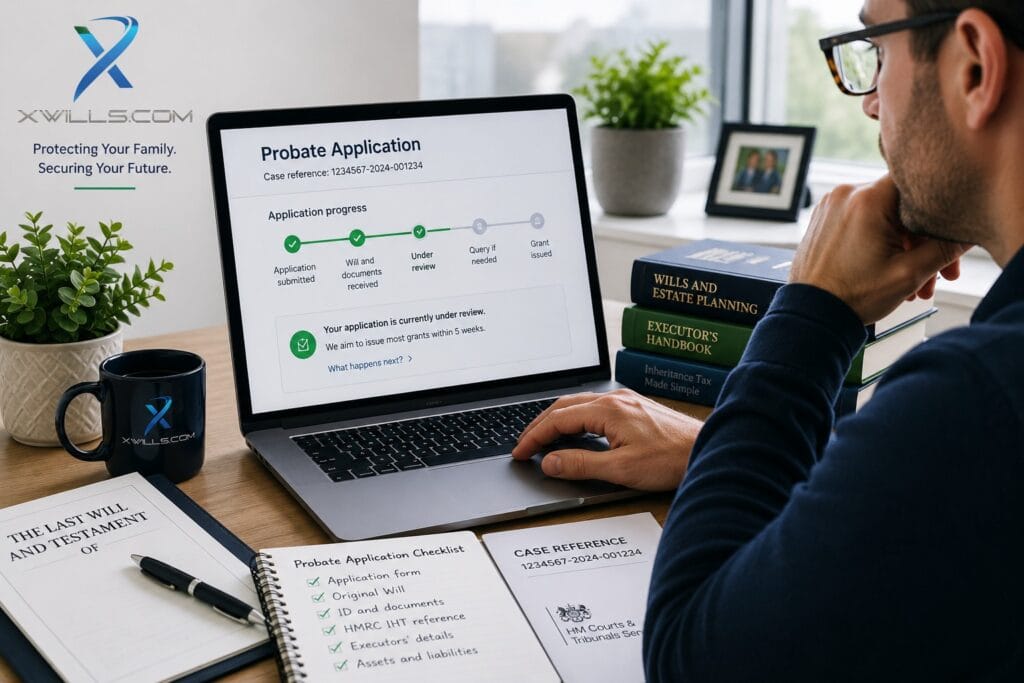
Direct Answer: If you applied for probate online, you can check the progress of your application through the online probate service. HM Courts & Tribunals Service (HMCTS) can also contact you if further information or documents are needed before the Grant of Probate can be issued.

Probate tracking is not quite like tracking a parcel. You will not necessarily see a detailed update for every internal stage of the application. Instead, check your existing online application for changes and watch for correspondence from HMCTS.

The 2026 Tracking Process:

Check your online probate application first and then check your email for any communication from HMCTS. If further information has been requested, responding to that query is important because the application may not be able to progress until HMCTS receives what it needs.

How to Check Your Probate Application

If you submitted the probate application yourself online, start by checking the same account used to make the application. You can also refer to the official GOV.UK probate guidance for current information about the application process.

  • Check Your Application: Sign in using the account associated with your probate application.
  • Look for Updates: Check the existing case for any change or request for further information.
  • Check Your Email: Look for correspondence from HMCTS and remember to check your spam or junk folder.
  • Respond to Queries: Supply requested information or documents as soon as reasonably possible to avoid unnecessary delay.

Planning Ahead: Probate deals with an estate after someone has died. Good estate planning can make matters clearer for the people you leave behind. Explore our estate planning guides for more information about Wills, trusts and protecting your estate.

Expert Tip: Before contacting HMCTS for an update, check both your online application and your email. The Probate Registry may already be waiting for information from you.
How Long Is Probate Taking in 2026?

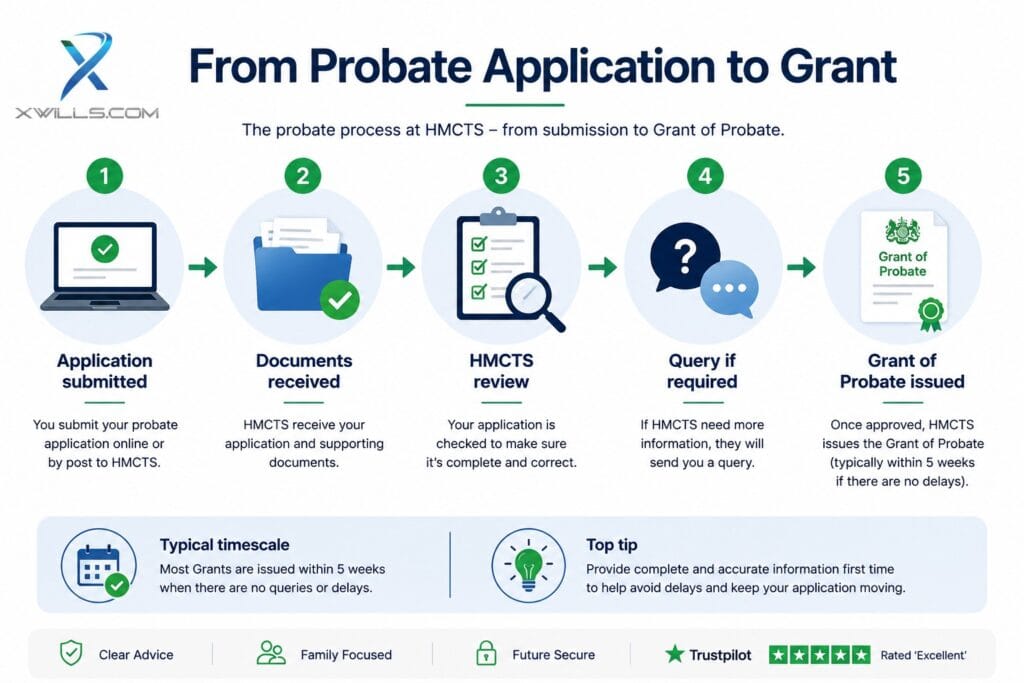
Direct Answer: HMCTS reported in May 2026 that probate grants issued between October and December 2025 were taking around five weeks. This was around two weeks faster than during the same period a year earlier.

The five-week figure is a useful indication of current Probate Service performance rather than a guaranteed waiting time for every application. An individual estate can take longer if HMCTS needs additional documents, clarification or further checks before it can issue the Grant of Probate.

Official source: HM Courts & Tribunals Service published the latest service update in May 2026. Read the HMCTS probate service update.

Why Is My Probate Application Taking So Long?

Direct Answer: A probate application can take longer when HMCTS needs further information before it can issue the Grant of Probate. Missing documents, questions about the Will, executor details and inheritance tax information can all cause an application to be stopped while HMCTS waits for the issue to be resolved.

A delay does not necessarily mean your application has been rejected. HMCTS describes applications requiring additional information as being "stopped". Once the issue has been dealt with, the application can return to the probate process.

Before You Chase HMCTS:

Check your online probate account and your email first, including your spam or junk folder. If HMCTS has already requested further information or documents, your application may not be able to progress until you respond.

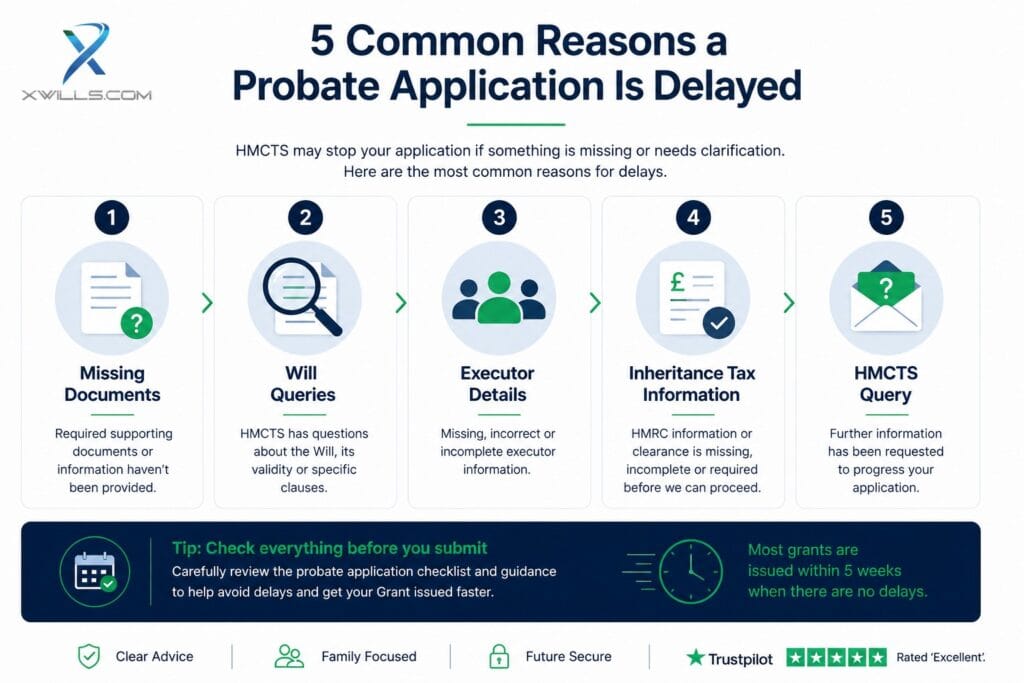
5 Common Reasons Probate Applications Are Delayed

  • 1. Missing Documents: HMCTS may be unable to continue until the required supporting documents have been received.
  • 2. Questions About the Will: Damage, alterations or other issues involving the Will can lead to HMCTS requesting further evidence or clarification.
  • 3. Executor Details: Where several executors are named, the application must correctly explain who is applying and what is happening with any executor who is not.
  • 4. Inheritance Tax Information: Some estates require information to pass between HMRC and HMCTS before the probate application can progress.
  • 5. An HMCTS Query: If a probate examiner needs clarification, the application can remain stopped until the requested information is supplied.

HMCTS Guidance: HMCTS has published guidance specifically explaining common causes of stopped probate applications and how applicants can avoid unnecessary delays. Read the official HMCTS guidance on probate delays.

Expert Tip: If your application appears to have stopped progressing, establish whether HMCTS is waiting for something from you before assuming the delay is simply a processing backlog.

5 common reasons a probate application is delayed including missing documents Will queries executor details inheritance tax information and HMCTS queries
Five common issues that can delay a probate application in England and Wales

How Do I Contact the Probate Service Centre?

Direct Answer: You can contact the HMCTS Probate Service Centre on 0300 303 0648. For an update about an existing probate application you can also email contactprobate@justice.gov.uk. Have your probate case reference available so HMCTS can identify the correct application.

Before contacting HMCTS check your online probate account and any emails you have received. If the Probate Registry has already requested further information dealing with that request may be the quickest way to get the application moving again.

HMCTS Probate Contact Details — 2026

Telephone: 0300 303 0648

Opening Hours: Monday to Friday 9am to 1pm

Application Updates: contactprobate@justice.gov.uk

Official Details: HMCTS Probate Service Centre

What Should You Have Ready Before Contacting HMCTS?

  • Probate Case Reference: Keep your application reference available when you call or email.
  • The Deceased's Details: Have the full name of the person whose estate is being administered.
  • Application Date: Know approximately when the application was submitted and whether you applied online or by post.
  • Previous Correspondence: Keep any HMCTS emails letters or requests for further information available so you can explain exactly what has happened.

Do Not Start Another Probate Application

If you are simply waiting for an update on an existing application do not submit another application. Check the existing case and contact HMCTS if necessary rather than creating a duplicate.

Related Estate Planning: If dealing with probate has highlighted gaps in your own arrangements read our estate planning guides or learn more about Lasting Powers of Attorney.

Can I Track Probate If a Solicitor Applied for Me?

Direct Answer: Yes but if a solicitor or probate practitioner submitted the application for you they will normally manage the case through the professional MyHMCTS service. Your solicitor should therefore be your first point of contact for an update on the application.

Professional probate applications are handled differently from applications submitted directly by members of the public. Solicitors and probate practitioners can use MyHMCTS to submit and manage eligible probate applications online.

Who Should You Contact?

If a professional submitted the probate application on your behalf ask them to check the case first. They should be able to tell you whether the application is progressing normally whether HMCTS has raised a query or whether further information is required from the estate.

What Should You Ask Your Solicitor?

  • Has the Application Been Submitted? Confirm that the probate application has actually been sent to HMCTS and ask when it was submitted.
  • Has HMCTS Raised a Query? Ask whether the Probate Registry has requested any further information documents or clarification.
  • Is Anything Needed From Me? Check whether the solicitor is waiting for information or documents from an executor beneficiary or another party.
  • Has the Grant Been Issued? Ask whether HMCTS has approved the application and issued the Grant of Probate.

Official Professional Guidance: HMCTS publishes separate guidance explaining how solicitors and probate practitioners use MyHMCTS to apply for and manage probate applications online.

Expert Tip: If a solicitor is administering the estate avoid contacting HMCTS and your solicitor separately about the same issue unless there is a specific reason to do so. Your solicitor will usually have the clearest view of the application and any outstanding Probate Registry queries.

How Do I Know When Probate Has Been Granted?

Direct Answer: When probate is granted HMCTS issues the Grant of Probate to the executors. If you applied online you should receive notification when the application has been approved. If a solicitor or probate practitioner applied for you they should confirm when the grant has been issued.

The Grant of Probate is the legal document confirming the executors' authority to administer the estate. Once it has been issued executors can normally use the grant when dealing with organisations holding the deceased person's assets including banks investment providers and property transactions.

What Happens After Probate Is Granted?

Receiving the grant does not mean the estate administration is finished. The executors still need to collect the estate assets settle outstanding debts and liabilities deal with any tax matters and eventually distribute the remaining estate to the beneficiaries in accordance with the Will.

What Can Executors Do With the Grant of Probate?

  • Access Estate Assets: Financial institutions may ask to see the grant before releasing money or investments held by the deceased.
  • Deal With Property: The grant may be required before executors can complete the sale or transfer of property belonging to the estate.
  • Pay Estate Liabilities: Executors can use estate funds to settle valid debts expenses and outstanding liabilities before distributing the inheritance.
  • Distribute the Estate: Once the administration is complete the remaining assets can be distributed to the beneficiaries according to the Will.

Probate Granted Does Not Mean Estate Completed

Beneficiaries should not assume that an inheritance will be paid immediately after the Grant of Probate is issued. Executors must complete the administration properly and make sure debts tax and other estate liabilities have been dealt with before making final distributions.

Official Guidance: GOV.UK explains what happens after a grant has been issued and the responsibilities involved in administering an estate. See GOV.UK guidance on dealing with the estate of someone who has died.

Expert Tip: Keep the Grant of Probate and the estate records together. Executors should maintain clear records of assets debts payments and distributions throughout the administration of the estate.

Probate application process from submission and HMCTS review to Grant of Probate being issued
The five main stages of a probate application in England and Wales from submission to the Grant of Probate

Can I Check If Someone Else Has Been Granted Probate?

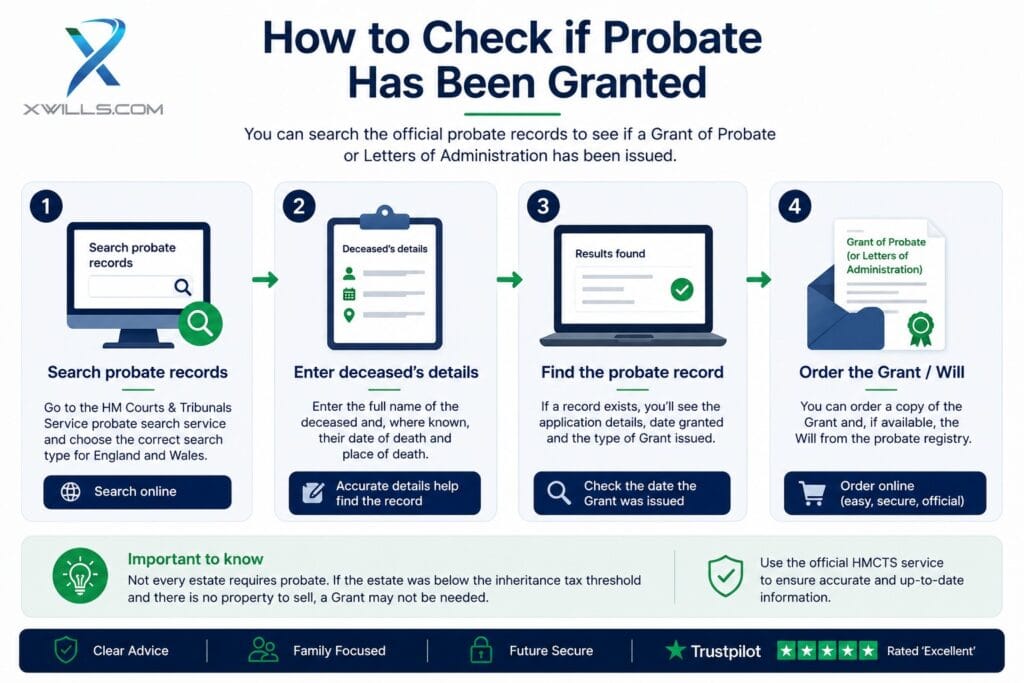
Direct Answer: Yes. Once a Grant of Probate or Letters of Administration has been issued in England and Wales you can search the official probate records online. You can also order a copy of the probate record including the grant and Will where a Will is available.

This is different from tracking a probate application that is still being processed. The public probate search is primarily useful for checking whether a grant has already been issued and viewing the probate record after it becomes available.

Search the Official Probate Records

GOV.UK provides an official service for searching probate records for people who died in England and Wales. You can search for probate records and Wills on GOV.UK.

What Can the Probate Search Tell You?

  • Whether a Grant Has Been Issued: A probate record can confirm that the court has issued the legal authority needed to administer the estate.
  • The Type of Grant: The record may relate to a Grant of Probate where there is a Will or Letters of Administration in other circumstances.
  • A Copy of the Will: Where a Will forms part of the probate record you can order a copy through the official service.
  • The Probate Record: This can provide useful information about the estate and the people given authority to administer it.

Important: This Does Not Track a Pending Application

If you cannot find a probate record it does not automatically mean that nobody has applied. The application may still be in progress or the grant may not yet be available through the public search. If you are the applicant use your own application details to check progress rather than relying on the public probate search.

Planning Your Own Estate: If you are checking somebody else's Will or probate record because it has raised questions about your own arrangements explore our estate planning guides for information about Wills trusts inheritance and protecting your estate.

Expert Tip: Think of the two services differently. Your probate application is used to follow a case you are involved with while the public probate search is used to find probate records after a grant has been issued.

How to check if probate has been granted by searching official probate records and ordering a Grant of Probate or Will

What Should I Do If Probate Is Taking Too Long?

Direct Answer: If your probate application is taking longer than expected first check whether HMCTS has asked for further information or documents. If nothing appears outstanding and the application has not progressed contact the Probate Service Centre with your case reference and ask for an update.

Expert Q&A: Tracking Probate in 2026

How often should I check my probate application?

There is usually no benefit in checking several times a day. Check your online account and email periodically and respond promptly if HMCTS asks for further information.

Can I speed up a probate application?

There is no general fast-track route simply because an executor wants the grant sooner. The most practical way to avoid unnecessary delay is to submit accurate information provide the required documents and respond quickly to any query raised by HMCTS.

Does a delay mean there is a problem with the Will?

No. Probate can be delayed for many administrative reasons. A question about the Will is only one possible cause alongside missing documents executor information inheritance tax matters or an HMCTS query.

Can beneficiaries contact HMCTS for an update?

Beneficiaries do not manage the probate application in the same way as the executor or professional applicant. If you are a beneficiary your first point of contact should normally be the executor or solicitor administering the estate.

Can I check probate without the application reference?

If you are the applicant the case reference is the best way to identify the application when contacting HMCTS. If you are trying to find out whether a grant has already been issued for somebody else's estate use the official GOV.UK probate records search.

Planning for Your Own Family: If dealing with probate has made you reconsider your own Will or estate arrangements explore our estate planning guides or see how Property Protection Trusts can help protect a share of the family home for future beneficiaries.

Expert Verdict: Most probate delays are resolved by identifying exactly what HMCTS is waiting for. Check the application first respond to any outstanding query and only then contact the Probate Service Centre if the reason for the delay is still unclear.

Planning Ahead

Make Things Easier for Your Family Before Probate Is Needed

If dealing with a probate application has made you think about your own estate planning it may be a good time to review your Will and the arrangements your family would need to follow after your death. Clear up-to-date planning can help your executors understand your wishes and identify the people and assets involved.

Want to review your own Will or estate planning arrangements? Speak to Xwills about the options available for you and your family.

Book Your Free Consultation

Need official probate information? For applications and current government guidance visit GOV.UK — Applying for Probate. To search for an issued grant or Will use the official probate records search.

About the Author

Andrew Walters — Xwills

Andrew Walters is a member of the Society of Will Writers and provides estate planning guidance through Xwills. His work focuses on helping individuals and families understand Wills trusts Lasting Powers of Attorney and practical estate planning options in England and Wales.

Verify Andrew Walters with the Society of Will Writers | Andrew Walters on LinkedIn

Sources & Editorial Information

This guide was last updated in August 2026 and relates to probate in England and Wales. Information has been checked against official guidance published by GOV.UK and HM Courts & Tribunals Service.

GOV.UK — Applying for Probate | GOV.UK — Search Probate Records | HMCTS Probate Service Centre

Important: This article provides general information about probate and estate planning in England and Wales and should not be treated as legal advice for your individual circumstances. Probate requirements can depend on the estate and the circumstances involved. For official probate procedures and current requirements refer to GOV.UK or HMCTS.